

Until last week Monday, I had never heard the name Femi Osibona. But within a few hours of the collapse of his Ikoyi 21-storey building in Lagos, I came to learn a great deal about the late proprietor of the ‘360 Degrees Towers’.
From the ‘prophetic laying of hands’ that catapulted a man selling shirts on the streets of London to a multi-billionaire global property developer, to tales about serving as a front for Abuja politicians, religious bigotry and business sharp practices, the ‘biography’ of Osibona is now in the public arena.
And it doesn’t seem to matter that everything we ‘know’ about Osibona are from single stories at a period he is no longer around to defend himself.
I never met Osibona so I have no way of disputing what has been said or written about him. For the record, I am also concerned that someone could be undertaking gigantic building projects without the necessary support systems that come with organized business structures and I find the videos of his altercations with Lagos authorities quite disturbing.
However, I still believe that a little empathy and sensitivity will serve us in times like this, especially when we do not have all the facts.
Meanwhile, barely 24 hours after the Ikoyi building came down in rubble, Governor Babajide Sanwo-Olu ordered the indefinite suspension of the General Manager, Lagos State Building Control Agency (LASBCA), Gbolahan Oki.

But not before Oki had made some chilling revelations. “He (Osibona) got approval for a 15-storey building and he exceeded his limit,” Oki told the News Agency of Nigeria (NAN) on the telephone, shortly after the building collapsed. “I am on ground here and the materials he used, the reinforcement, are so inferior and terrible.”
Sadly, this is a tragedy foretold. Less than three months ago, specifically on 23rd August this year, the University of Witwatersrand, South Africa, published an article by Olasunkanmi Habeeb Okunola, a Nigerian postdoctoral fellow at the Global Change Institute.
In ‘Building Collapses are all too Common in Lagos. Here’s Why’, Okunola revealed that 152 buildings collapsed in Lagos between 2005 and 2020, comprised of 76.6% residential, 13% commercial and 9.4% institutional.
With data from architects, builders, structural engineers, town planners, estate surveyors and valuers, Okunola wrote that “most of the buildings that collapsed are typically multi-storey buildings,” with more than 4,000 families rendered “homeless and traumatised.”
Although Sanwo-Olu has constituted the usual probe panel on the collapsed Ikoyi building, few Nigerians believe that anything will come of the exercise. In 2014, we experienced a similar (and bigger) tragedy at the Synagogue Church of All Nations (SCOAN). The Lagos Coroner’s Inquest returned a verdict that indicted the church for “criminal negligence” and recommended prosecution for the death of 116 persons.
According to the Coroner’s Court, presided over by Chief Magistrate Oyetade Komolafe, the Church did not obtain the necessary permit or approval before commencing construction of the building. Of the 116 victims, 85 were South Africans, 22 Nigerians, two Beninoise and two Togolese.
Six could not be identified. In typical Nigerian fashion, the ‘crime scene’ became a pilgrimage for prominent people, including then President Goodluck Jonathan, who paid solidarity visits to commiserate with the church promoter, late Pastor T.B. Joshua!
However, the more bizarre incident occured two years later, in March 2016, when a five-storey building collapsed in Lekki, claiming over 30 lives. Then Governor Akinwunmi Ambode made the usual noise and dance before the state filed a six-count criminal charge against the Managing Director of Lekki Gardens, Richard Nyong and seven others.

With the matter out of public glare, a ‘plea and sentence agreement’ was signed for the developer to pay N100 million to the state government and N10 million each to families of five victims, to discontinue the case. Unfortunately for the dealmakers, the trial Judge at the Ikeja Division of the state High Court was incensed when the case came before her in February last year.
In addition to condemning the fact that the scandalous agreement was drawn up between the state government and the developer without representatives of the said families, Justice Sybil Nwaka faulted the amended charge for omitting criminal aspects of the original charges.
The amended charge, according to Justice Nwaka, “is talking just about the failure to obtain building permits and other building approvals. The amended charge did not contain negligence, loss of lives and others (which were in the original charge filed by the Lagos State government).
Many lives were lost, breadwinners of many families,” she said. When the developer’s lawyer sought to justify the agreement, Justice Nwaka asked, “Are you saying you are paying more to the state government than the deceased families? Five families will get N50 million while the state will get N100 million?”
Justice Nwaka deserves commendation for her courageous stand. And Lagos State should be ashamed. Collecting blood money from a building promoter whose criminal negligence led to the death of innocent people is unconscionable.
‘Pay-as-you-kill’ cannot be an acceptable way to deal with the systemic problem around building and construction regulations that engender serial disasters.
I understand that land is a scarce commodity in Lagos. As I wrote in a recent column, Niger State alone is 23 times the size of Lagos in land mass. To worsen matters, the small space within Ikoyi is where Lagos Big Boys and Girls want to congregate.
It is the ultimate status symbol outside ‘Banana Island’–easily the most expensive slum to be found anywhere in the world. Especially during rainy season! So, there will always be high-rise buildings in Lagos.
The challenge is that due to a glaring regulatory failure, quacks are taking over the building sector. Not only in the state but all over Nigeria, to our collective detriment.
Meanwhile, I am an admirer of Governor Sanwo-Olu who is always on top of situations whenever duty calls. But the conventional wisdom that it is better to erect a fence at the top of a cliff than to build a hospital below will serve him at this period.
The Ikoyi tragedy should compel a more rigorous introspection than a four-week perfunctory probe. There are several issues to examine and address. The first is about response to emergencies. One can only imagine the agony of victims trapped for hours under the fragments of concrete and mangled rods in Ikoyi. As well as the trauma experienced by their families in the intervening period. We can do better than that.
The second is the dignity of those who lost their lives. We are not the only country where people have mobile phones with cameras. But here, security personnel and first responders are more interested in taking pictures of those in distress than in helping them.
Some of the gory photographs from the collapsed building are a sad commentary on the value we place on human life in Nigeria and there must be a way to stop such callous and irresponsible acts. The third and most important issue is that of regulation.
Ordinarily, building construction should be managed by qualified professionals whose duty it is to ensure that everything is done in accordance with approved plans and standards while paying attention to necessary details, including the quality of materials being used.
In my September 2015 column, ‘Catalogue of Made-in-Nigeria Tragedy’, I examined some of the cheap deaths in Nigeria: Electrocution from dangling power cables, emission of carbon monoxide from ‘I-better-pass-my-neighbour’ generator fumes, heavy duty containers skidding off bridge to land on vehicles below, explosion of petrol tankers on the highway, over-the-counter sale of prescription drugs, capsizing of overcrowded canoes on waterways, incessant collapse of buildings etc.
Behind these tragedies is the near absence of safety standards in most areas of public exposure in Nigeria today. We cannot continue to run our affairs like that.
On Monday, the Lagos State House of Assembly expressed concern “over the wide speculation that the (Ikoyi) building was raised to 21 floors contrary to the 15 floors approved by the Lagos State Physical Planning Permit Authority (LASPPPA) for the owner,” as well as on “the constant collapse of buildings in the state …(which) can be attributed to unqualified or unskilled builders, use of sub-standard building materials, illegal conversion or alterations to existing structures and lack of maintenance to mention a few.”
The Lagos lawmakers should go beyond passing motions. Until there are stringent laws that penalize developers who infringe on building codes and regulators who shirk their responsibility, we will continue to witness this harvest of monumental tragedy.
Echoes from Anambra Guber Poll
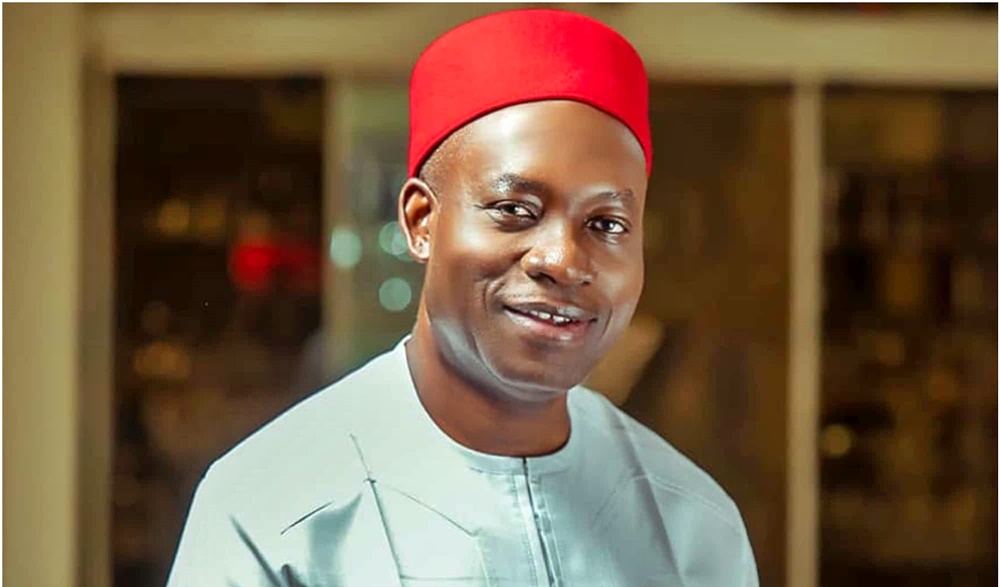
Barring another judicial abracadabra, the next Governor of Anambra State will not be decided ‘The Ben Johnson Way’. With Tuesday’s declaration of Prof Chukwuma Soludo duly elected by the Independent National Electoral Commission (INEC), I do not expect those who came 4th at the poll to upstage the former Central Bank of Nigeria (CBN) Governor with exhausting court runs that are traditionally part of election processes in Anambra State.
But if there is any major take-away from the election, it is the validation of how important technology is to credible polls. Voter turn-out was low and that was reflected in the results, leaving little room to maneuver for those adept at gaming elections.
By replacing the Smart Card Reader (SCR) with the Bimodal Voter Accreditation System (BVAS) device, INEC has upped the game, especially given that the much-abused incident form is now history.
Despite teething challenges, we need to support INEC in their use of technology. But I agree with the submission by CLEEN Foundation that the Commission needs to improve logistic and operational challenges associated with BVAS.
“INEC result portal should be improved for more transparency and accountability through automation of the sum of votes received by political parties at the polling units; INEC should prosecute electoral offenders to serve as deterrent to others,” CLEEN recommends.
“INEC should provide enough sensitive materials, such as Braille for voters with visual impairment; the commission should train and retrain electoral officers and ad-hoc staff to enable them meet with the changing needs of the electorate in Nigeria.”
I am sure the Commission will take those suggestions on board as they prepare for future elections. However, when I learned the Minister of Labour, Dr Chris Ngige, was nagging over the failure of the BVAS to accredit him for voting last Saturday, I was amused.
When his own party, the ruling All Progressives Congress (APC) conducted the Anambra gubernatorial primaries where Senator Andy Uba emerged the candidate in June this year, Ngige told Nigerians that he was at his hometown of Alor waiting for the exercise to commence when he heard the announcement of result in the news!
To Soludo who must now provide the much-touted Solutions to Anambra State problems, I offer my hearty congratulation!
The Yar’Adua Study on Subsidies (IV)
In this part four of a 2008 study instituted by the late President Umaru Musa Yar’Adua to determine the extent of subsidy and tariff implementation in five critical sectors of our national life, I am taking the bits on Agriculture.
The study, drawing on the experiences of several countries, highlights important issues to be addressed in the design of framework for subsidies and tariffs implementation in these key sectors of the economy (power, education, health, agriculture, and petroleum) which should enable the government to target the poor adequately.
After this, I am taking a long break until an appropriate time to conclude with subsidy in the downstream sector of the petroleum industry. So, I conclude today with the aspect of the study (based on charts converted into a flowing narrative) dealing with subsidy in Nigeria’s agricultural sector.
Most of the special programmes for boosting food production in Nigeria since the 1970s have relied on input subsidies as the main channel of providing incentives to farmers. But the subsidies have continued to reduce over the years and now stand at 25% for fertilizer, 50% for seeds and 25% for agrochemicals.
Others are tractor and equipment/implements (25%) and processing equipment (25%). Owing to defective distribution/marketing strategy, middlemen have hijacked the commodity thus depriving the farmers the benefit of the low price arising from the subsidy.
In Nigeria, the three tiers of government have been involved in subsidizing agricultural inputs in various areas such as fertilizer, crops, livestock, and fisheries. These policies have suffered a lot of inconsistencies over the years, especially in fertilizer.
Fertilizer policies kept changing from year to year in a bid to answer problems of availability, leakage, and arbitrage. In 1997, the federal government opted for a full withdrawal from fertilizer procurement and subsidy leaving the industry stranded.
Meanwhile, the National Seed Service (NSS) of the Federal Ministry of Agriculture and Rural Development was established in 1992 to coordinate the development, monitoring policy and implementation of quality control for agro-seeds.
The agricultural research institutes were responsible for the production of breeder seeds. The resource-poor rural fishermen in the artisan fisheries sub-sector enjoy subsidies from seed monies/loans provided under the Artisan Fisheries Development Project, Sustainable Fisheries Livelihood Project, and ECOWAS Fund Accelerated Artisan Fish Production Project. Also, industrial fisheries sub-sector provides incentives to fish exporters, operators in the sector exporting fish above one million US Dollars, enjoy incentives of over 30 per cent paid to them in equivalent Naira.
In 2001, N5.042 billion was spent to purchase 170,000 quantities. With real value to the farmers put at N4.877 billion, the subsidy was N1.219 billion. In 2002, N5.163 billion was spent to purchase 163,700 quantities while the real value to farmers was N3.597, leaving a subsidy of N899.266 million.
In 2003, N5.814 billion was spent to purchase 120,000 quantities valued at N4.620 for farmers, leaving a subsidy of N1.551 billion. In 2004, N13.314 billion was spent to purchase 245,400 quantities at the value of N11.080 billion to farmers, leaving a subsidy of N2.77 billion.
And in 2005, N9.044 billion was spent to purchase 156,000 quantities valued at N8.342 billion to farmers, leaving a subsidy of N2.085 billion. For agrochemicals, which attracted 100 percent subsidy, 26,500 litres were purchased in 2004 at N66.25 million, 118,090 litres were purchased in 2005 at N295.225 million, 130,937 litres were purchased in 2006 at N360.076 million, 174750 litres were purchased in 2007 at N480.563 million.
The scheme has put a lot of stress on the finances of both the federal and state governments, while taxing the efficiency of implementing institutions. In terms of benefits, subsidized input seemed to have been monopolized by a few influential urban based farmers, while the peasant farmers who constitute the majority (about 75 percent) of farming households in Nigeria had little or no access to these inputs.
Problems encountered in the implementation of agricultural subsidy include dual market prices for sale of fertilizer and procurement problems.
Meanwhile, problems that require interventions include aged farming operative, Lack of credit facilities, absence of enabling environment, subsistence agriculture due to land tenure system, poor quality of products and low production of certified seed. Malawi presents a good case study.
MALAWI: The Malawian government eliminated agricultural subsidies including for fertilizers in the 1980s and 1990s through the influence of the World Bank. A fallout of this action was that the country experienced a series of disastrous agricultural harvest that peaked in 2005 with millions of people needing emergency food aid.
Indeed, Malawi was for many years at the brink of famine. With the advent of a new regime, the government embarked on an agricultural policy reversal with turn-around effect through a policy thrust that followed what the West (Europe and America) practiced and not what it preached on agriculture subsidies.
Thus, Malawi implemented an agricultural policy that reinstated and deepened subsidies particularly on fertilizer, improved seedling, as well as credit and agricultural research. The modalities for the subsidies include distribution of coupons to farmers that allowed them to purchase two 1101bs sacks of fertilizers for about US$7 – one-fifth of the market price.
Coupons were given to buy enough seeds for planting. The subsidies programme cost the government about US$62 million or 6.5 per cent of total budget despite the virulent opposition by the World Bank and IMF.
The outcome of the new approach to subsidies was a massive turn-around with a phenomenal jump in corn/maize production from 2.4 million metric tons in 2006 to 3.4 million metric tons in 2007. Malawi was also able to save US$12 million it had spent importing food in 2005 due to the bumper harvest. It also realized US$120 million in sales of maize to Zimbabwe and other countries, thus raising questions about the policies promoted for several-years under the aegis-of the Bretton Woods Institutions.
It is also important to note that the administration of subsidies remains problematic in the countries like China, India, Canada, Japan, Switzerland which were examined.
However, the spate of reforms which these countries have embarked upon is yielding results for increased involvement of the market mechanism. One of the most successful models of fertilizer distribution system is the one introduced in Albania by the International Fertilizer Development Centre (IFDC) and United States of America.
Apart from the fact that the burden of subsidies on the treasury is growing, the target groups do not have access to agricultural inputs at the open market. They buy at exorbitant prices. Also, information is not readily available on the other agricultural input to allow for a meaningful analysis. Emphasis should be directed at farmers that cannot afford to pay for fertilizer i.e. peasant farmers.
The Malawian model of distributing coupons for the purchase of fertilizers could be adopted rather than government getting involved in outright distribution of fertilizers to farmers which never get to them. Large scale farmers should be protected against unfavorable price fluctuation.
Alternatively, the implementation of output- based subsidies could be considered by the government. This can be achieved by providing a guaranteed minimum price for each farm gate crop.
The advantage of this idea is that it is explicitly targeted at the farmers and cannot be exploited by non-farmers/middlemen as is the case now under the fertilizer subsidy. For this mode of output-based subsidies to succeed, it must be announced ahead of the planting seasons so that farmers can decide what agricultural crop/product to farm for the season.
Such guarantee minimum prices have the potential of enhancing overall output through the incentive it offers. The federal government should use subsidies to encourage the production of some strategic products- food staples, export crops, livestock, and agro-raw materials for domestic agro-industries.
Agriculture could be subsidized through non-recourse loans i.e. government giving farmers loans and using their future harvest as collateral. The government should enforce restrictive tariffs and subsidies to certain domestic crops. Government should resuscitate NAFCON to minimize the burden of subsidy on fertilizer and ensure its availability.
The federal government should urgently solve the problem of inadequate supply, unintended beneficiaries, and diversion to the black market across the borders by leaving fertilizer procurement, distribution, and marketing in the hands of the private sector.
Proponents of subsidy have argued on the need for income redistribution due to wide income disparity particularly, in the developing countries. However, recent developments have shown that such good intention of the government fail to address the inequality as the better-off benefits more from subsidy than the poor in the society. Therefore, it is necessary to develop a new framework for the implementation of subsidies in the various sectors of the economy.


